




Price: $999.99 $899.99
(as of 2026-10-24 02:31 GMT+0000 – Details)

Streaming Platform and User Experience
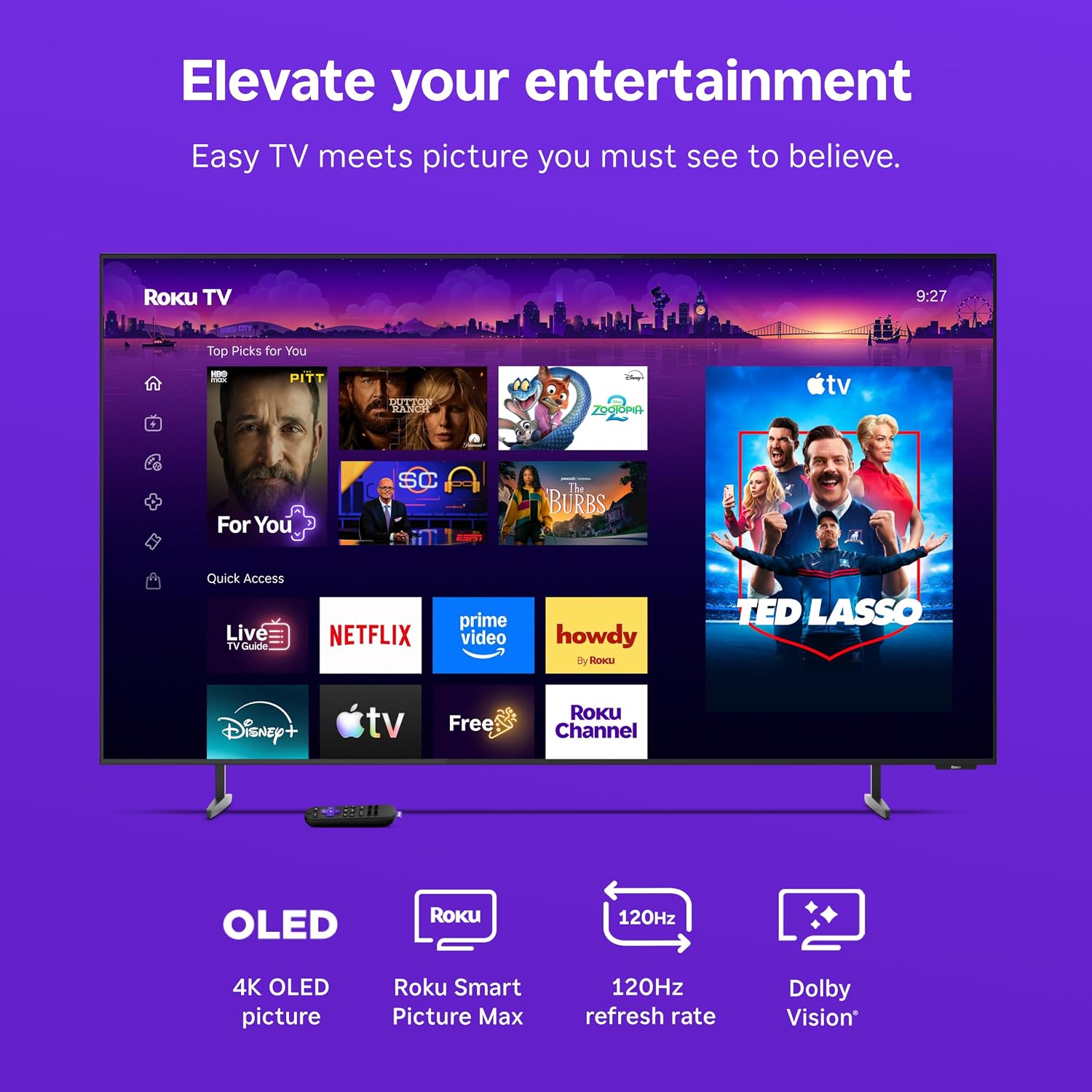
The Roku Pro Series 55‑inch OLED TV is built around the Roku streaming platform, which the manufacturer identifies as America’s number‑one TV streaming service based on hours streamed. The description emphasizes a setup process that takes only minutes, a home screen that is simple to navigate, and an uncluttered remote that handles all essential functions. By integrating the streaming interface directly into the television, the device aims to reduce the need for external boxes or complicated menus. This approach can lower the learning curve for new users and streamline daily operation, although the actual ease of use will depend on the viewer’s familiarity with Roku’s layout and on the stability of the home network.
OLED Picture Performance
The product description highlights OLED technology as the core of the picture performance, stating that it delivers colors at their most vibrant and blacks that are truly black. Because each pixel emits its own light, OLED panels can achieve infinite contrast ratios without a backlight, which benefits dark‑room viewing and high‑dynamic‑range content. The practical implication is that movies, shows, and games with deep shadows should appear more detailed than on typical LED‑LCD sets. A limitation to consider is that OLED brightness levels may be lower than some high‑end LED models, which can affect visibility in very bright rooms, and static images displayed for extended periods could risk image retention, though the manufacturer does not address this directly.
Automatic Picture Tuning and Dolby Integration
Roku Smart Picture Max is described as an automatic tuning system that adjusts the TV’s settings to suit the content being watched, removing the need for manual calibration. When combined with Dolby Vision, the set can render high‑dynamic‑range video with scene‑by‑scene metadata, provided the source material carries Dolby Vision signaling. Dolby Atmos support adds object‑based audio that can create a more immersive soundstage through the TV’s built‑in speakers or compatible external sound systems. The practical benefit is a more hands‑off viewing experience, but the effectiveness depends on the availability of Dolby‑encoded streams and on the acoustic environment, since the internal speakers may not fully exploit Atmos spatial cues.
Premium Remote Controls
The premium remote supplied with the Pro Series adds voice control, backlit buttons, and a remote‑finder function activated by a button on the side of the television. Voice commands can launch apps, search for titles, or adjust volume without navigating menus, which can speed up common tasks in low‑light conditions. The backlit keys improve usability in dark rooms, while the finder feature emits an audible tone from the remote to locate it when misplaced. These conveniences rely on the remote’s Bluetooth connection to the TV and on the microphone’s ability to understand spoken requests; performance may vary with background noise or accent.
Bluetooth Headphone Mode
Bluetooth Headphone Mode allows the viewer to pair personal wireless headphones with the TV for private listening, a feature useful for late‑night viewing or shared living spaces. The description does not specify supported Bluetooth codecs or latency figures, so audio‑video sync quality will depend on the headphone model and the TV’s implementation. In practice, most modern Bluetooth headphones supporting AAC or aptX Low Latency should provide acceptable synchronization, but users with older headsets may notice a slight delay. The feature also requires the TV’s Bluetooth radio to be active, which could marginally affect power consumption.
Gaming‑Focused Refresh Rate and Sync Technologies
The 120 Hz refresh rate is promoted for both sports clarity and gaming responsiveness. The set includes FreeSync Premium, Auto Low Latency Mode (ALLM), and Variable Refresh Rate (VRR), which together aim to reduce screen tearing and input lag when connected to compatible consoles or PCs. To benefit from these technologies, the source device must support the corresponding HDMI 2.1 features and the content must be rendered at high frame rates. If the connected hardware only outputs 60 Hz or lacks VRR support, the TV will still operate at its native 120 Hz but the adaptive sync advantages will not be realized.
Design, Stands, Cable Management, and Pricing Context
The ultra‑thin profile gives the television a minimalist aesthetic that remains attractive even when powered off. Tool‑less stands provide two height options, allowing the screen to sit lower for a traditional console setup or higher to accommodate a soundbar. An integrated cable‑management channel routes power and HDMI cords behind the panel, helping keep the installation tidy. The marketing copy suggests a “small step in price” relative to comparable OLED models, but no exact pricing or value comparison is supplied, so prospective buyers should verify current market pricing and warranty terms before committing.