





Price: $547.99 $402.30
(as of 2026-10-24 01:27 GMT+0000 – Details)

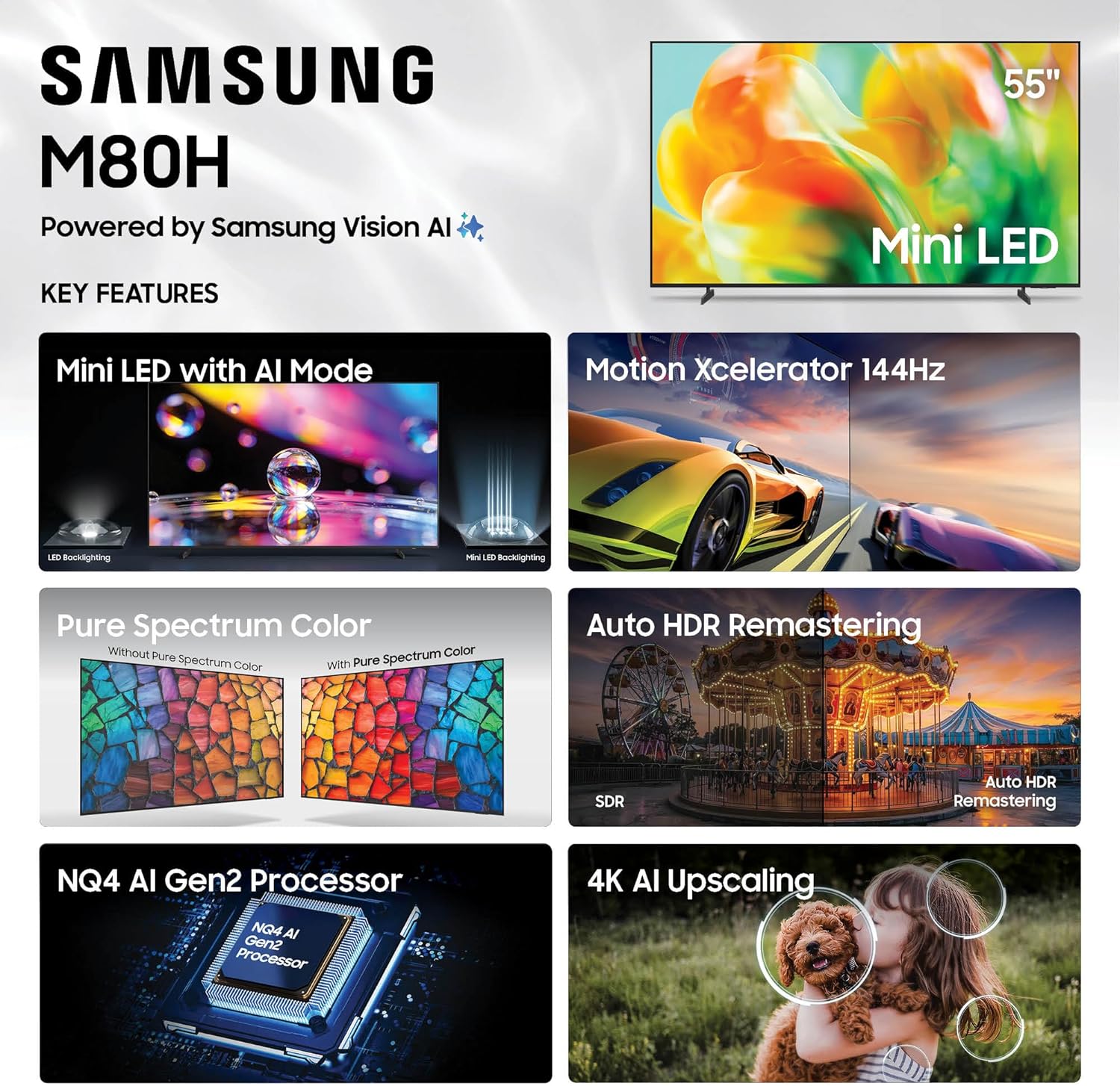
Mini LED with AI Mode
The Mini LED with AI Mode combines a dense array of compact, high‑efficiency Mini LEDs with an intelligent processing layer that evaluates each scene in real time. By adjusting backlight intensity locally, the system can produce brighter highlights while preserving deep blacks, resulting in a more dynamic contrast range than conventional LED panels. The AI engine analyzes color, detail, and motion cues to enhance clarity and color fidelity automatically. This approach aims to deliver a picture that feels more lifelike, especially in high‑dynamic‑range content, though the actual gain is measured against the 2026 Crystal UHD baseline and may vary with source material.
Motion Xcelerator 144Hz
Motion Xcelerator 144Hz provides a 144‑hertz refresh rate combined with variable refresh‑rate technology that synchronizes the display to the output of a compatible graphics source. In practice this reduces stutter and screen tearing during fast‑paced gaming or sports broadcasts, giving a smoother motion experience. The specification notes that 4K 144Hz is only available when the TV is driven by a PC‑connected game that supports such a signal and a suitable graphics card, so console players or streaming devices may not reach the full rate. Performance can also vary depending on the game engine and driver implementation.
Pure Spectrum Color
Pure Spectrum Color claims to reproduce one billion true‑to‑life colors by leveraging advanced color‑mapping algorithms together with the precision of Mini‑LED backlighting. The result is described as richer reds, deeper blues, and more vibrant greens, allowing each scene to appear with a broader gamut than standard LED TVs. Because the color expansion relies on the Mini‑LED’s local dimming capability, the benefit is most noticeable in content mastered for wide‑color spaces; standard SDR material may not fully exploit the extended palette. The marketing language notes the improvement is relative to the 2026 Crystal UHD reference.
Auto HDR Remastering
Auto HDR Remastering uses AI‑based formulas to convert standard dynamic range signals into an HDR‑like presentation, boosting highlight brightness, expanding color volume, and sharpening detail. The process runs in real time on the TV’s processor, so no user intervention is required. However, the description cautions that the resulting picture may vary based on the source content, and the enhancement is algorithmic rather than a true HDR mastering pipeline. Consequently, heavily compressed or low‑bitrate streams may show limited improvement, while well‑mastered SDR material can gain a noticeable lift in perceived contrast.
NQ4 AI Gen2 Processor
The NQ4 AI Gen2 Processor serves as the central compute engine, performing scene‑by‑scene analysis to sharpen edges, smooth motion, and enrich color saturation. It also handles advanced audio processing, aiming to create a more cinematic soundstage without external speakers. Because the processor works in real time, its benefits apply across streaming, broadcast, and gaming inputs. The description frames the improvement as a comparison to the 2026 Crystal UHD platform, and the actual perceptual gain will depend on the quality of the incoming signal and the content’s original mastering.
4K AI Upscaling
4K AI Upscaling applies the same AI‑based formulas to raise lower‑resolution sources to a 4K pixel grid, promising sharper visuals and smoother picture quality for streaming, gaming, and movie playback. The upscaling runs continuously, so even legacy broadcast or older streaming libraries benefit from the process. The manufacturer notes that the resulting picture may vary based on source content, meaning heavily compressed or noisy inputs may not achieve the same clarity as native 4K material. This feature is positioned as an enhancement rather than a replacement for true 4K production.
Smart Platform and Content Access
The smart platform advertises thousands of video games and free channels, but access requires a high‑speed internet connection, a compatible gaming‑service subscription, and a supported controller. A Samsung Account login is mandatory for network‑based services such as streaming apps; without it the TV limits functionality to external device connections via HDMI and over‑the‑air broadcasts where a tuner is present. Channel line‑ups vary by region and can change without notice, and the user interface may be updated at any time. These dependencies mean the full smart experience is contingent on ongoing service availability and account maintenance.